
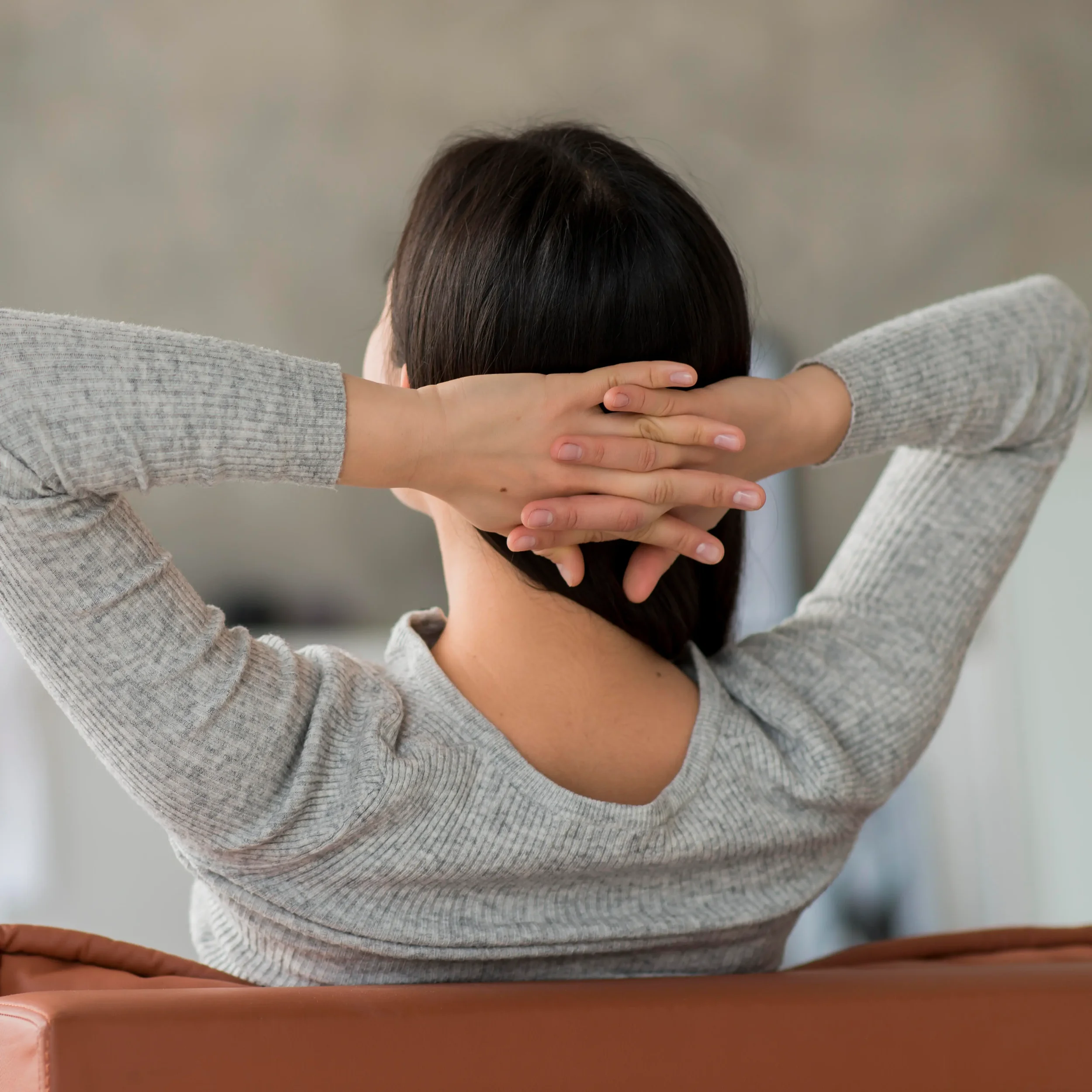
Stress and anxiety show up in almost every conversation we have with patients, no matter what they originally booked their appointment for. The good news is that you do not need a needle to get some relief. Acupressure, which uses the same points as acupuncture but with finger pressure instead of needles, is something you can do for yourself between visits or on a day when things feel like too much.
Here are six of the points we use most often in the clinic, along with how to find them and press them at home.
1. Yintang
Location: Right between your eyebrows, in the small dip above the bridge of your nose.
This is sometimes called the Third Eye point, and it is one of the simplest points to find on yourself. Use one finger and press gently but firmly for one to two minutes, breathing slowly as you go. Many patients tell us this point helps clear a racing mind and eases tension headaches that come with stress.
2. Hegu (Large Intestine 4)
Location: In the webbing between your thumb and index finger, at the highest point of the muscle when you bring your thumb and finger together.
Press into this spot with the thumb of your other hand for one to two minutes on each side. This point is used for stress, headaches, and general tension throughout the body. One note: this point is traditionally avoided during pregnancy, so check with your practitioner first if you are pregnant.
3. Neiguan (Pericardium 6)
Location: On the inside of your forearm, about three finger widths up from your wrist crease, between the two tendons you can feel there.
Press firmly with your thumb for one to two minutes on each arm. This is one of our favorite points for anxiety and for the nausea that sometimes comes with it. It is even the point behind those motion sickness wristbands you may have seen at the pharmacy.
4. Fengchi (Gallbladder 20)
Location: At the base of your skull, in the two hollow spots on either side of your spine, right where your neck muscles meet your head.
Use both thumbs and press upward into these points for one to two minutes. This point helps with the neck and shoulder tension that so often comes along with stress, and many patients find it eases headaches too.
5. Shenmen (Heart 7)
Location: On the crease of your inner wrist, in line with your pinky finger.
Press gently for one to two minutes on each side. Shenmen means spirit gate in Chinese medicine, and it is a point we turn to often for anxiety, racing thoughts, and trouble sleeping.
6. Taichong (Liver 3)
Location: On the top of your foot, in the groove between your big toe and second toe, about two finger widths up from where the toes separate.
Press firmly for one to two minutes on each foot. This point is associated with the Liver in Chinese medicine, which is closely tied to how we handle stress and frustration. It is a great point to add to your evening routine if you tend to carry tension through the day.
None of these points require any special training, and you can press them anywhere, whether you are at your desk, in the car before a meeting, or winding down at home. If your stress or anxiety feels like more than you can manage on your own, that is exactly what acupuncture sessions are for, and our Oakland team is happy to build a plan with you.
Frequently Asked Questions
-
Firm but comfortable pressure is the goal. You should feel a noticeable pressure, not pain. Adjust based on what feels right for your body.
-
As often as you like. Many patients use these points daily, especially during stressful weeks.
-
Acupressure is a helpful tool between visits, but it is not a full substitute for acupuncture. Needles reach the points more precisely and hold a stronger effect, especially for ongoing anxiety.
-
Yes. Hegu and a few other points are traditionally avoided during pregnancy. Talk with your practitioner about which points are safe for you.
-
Some people feel calmer within minutes of pressing these points. For longer term anxiety relief, regular acupuncture sessions tend to work best alongside at home acupressure.
-
Yes. Acupressure is a great starting point if you are curious about acupuncture but not ready to try needles yet.